
Most pool projects in Central Texas follow the same order: the pool goes in, the crew leaves, and the homeowner is left with a torn-up backyard and a new question. What do we do with everything around it? The answer is easier, and usually less expensive, when the landscape is planned before the excavator shows up.
Here is what I walk clients through in Leander, Round Rock, Cedar Park and Austin when a pool is on the way. Most of it comes from a recent Leander pool and landscape project, where I oversaw the pool installation and then reworked the existing landscape around it.
Plan the landscape before the pool is dug
Once concrete is poured, anything that needs to run under it gets expensive. Before the pool deck goes in, decide where you need:
- Sleeves under the deck for irrigation lines and low-voltage lighting cable, so you never have to cut concrete or bore under it later.
- Drain lines and catch basins to move water from the deck, roof and beds to a safe outlet.
- Bed lines and planting room along the fence, so privacy plants have enough soil depth and are not squeezed into a strip between the coping and the fence.
- Access for the pool crew. Heavy equipment compacts soil and breaks irrigation lines. Knowing the access route ahead of time tells you what will need to be rebuilt.
Get drainage right first
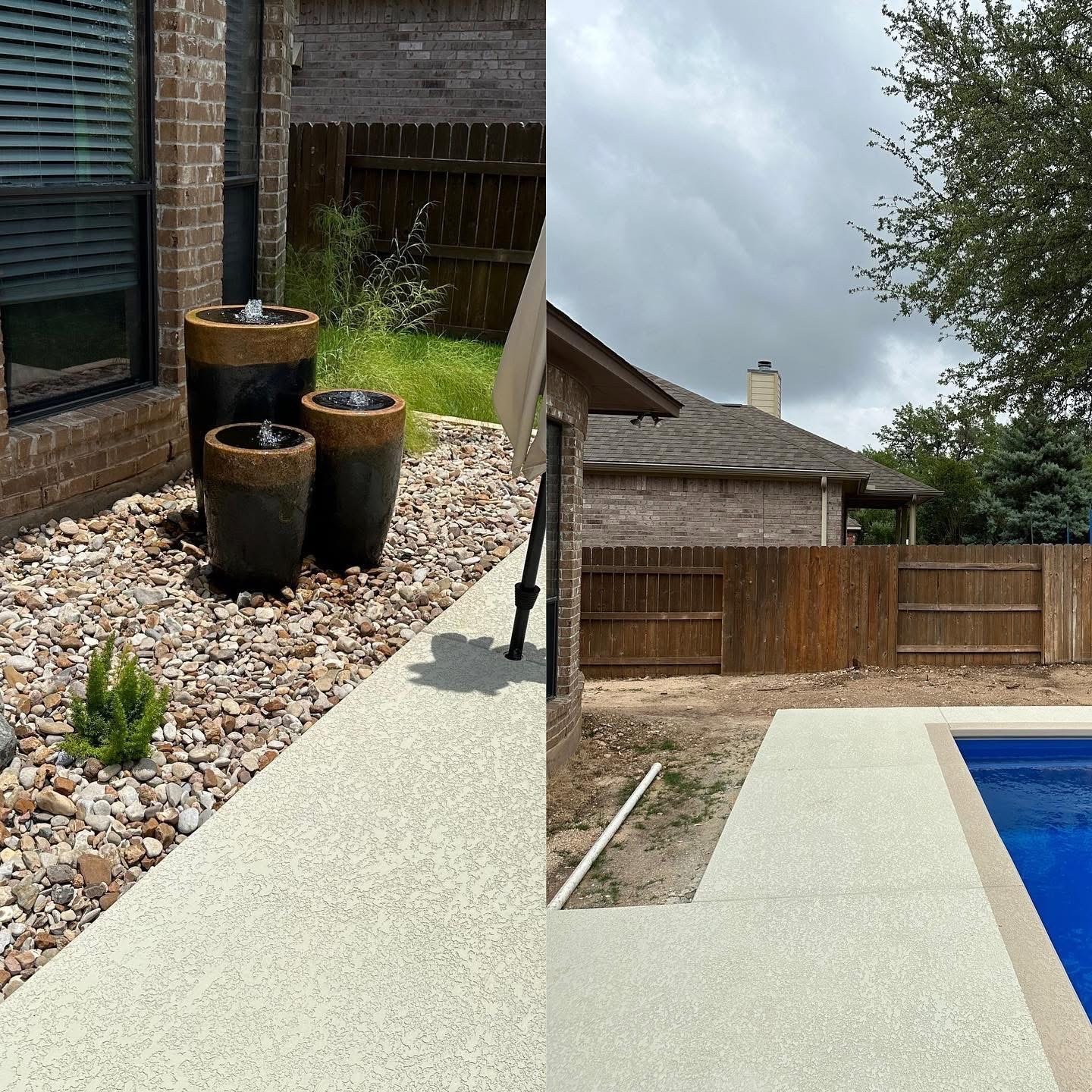
A new pool deck is a large hard surface, and in a typical backyard it often sits right where rain used to soak into the lawn. Water has to go somewhere. Pool decks are typically sloped away from the pool at about a quarter inch per foot (Structure Smart), and if the surrounding landscape sits higher than the deck, stormwater runs right back onto it (In The Swim). In narrow side yards, a new deck can also act like a dam across the path water used to take (Pennate Group).
In practice that means checking where water drains from the roof, the neighbor’s yard and the new deck, then giving it a path out. On the Leander project we installed sub-surface drainage before the beds and turf went in. In our clay soils, water that sits against a slab or a foundation causes problems you do not want to discover after the plants are in.
Check the fence and gate rules
In Leander, a swimming pool permit requires a fence at least 4 feet tall and a self-latching gate at least 54 inches high, shown on the plot plan (City of Leander pool requirements). The city code also says permanent equipment or structures may not be placed so they are easy to climb over the pool enclosure (Leander Code of Ordinances).
That last rule matters for landscape design. Raised planters, boulders, benches and even large shrubs next to the fence can create a step up. Other cities have their own versions of these rules, so check with your city and HOA before you finalize bed and seating layouts near the fence.
Choose plants for the pool zone
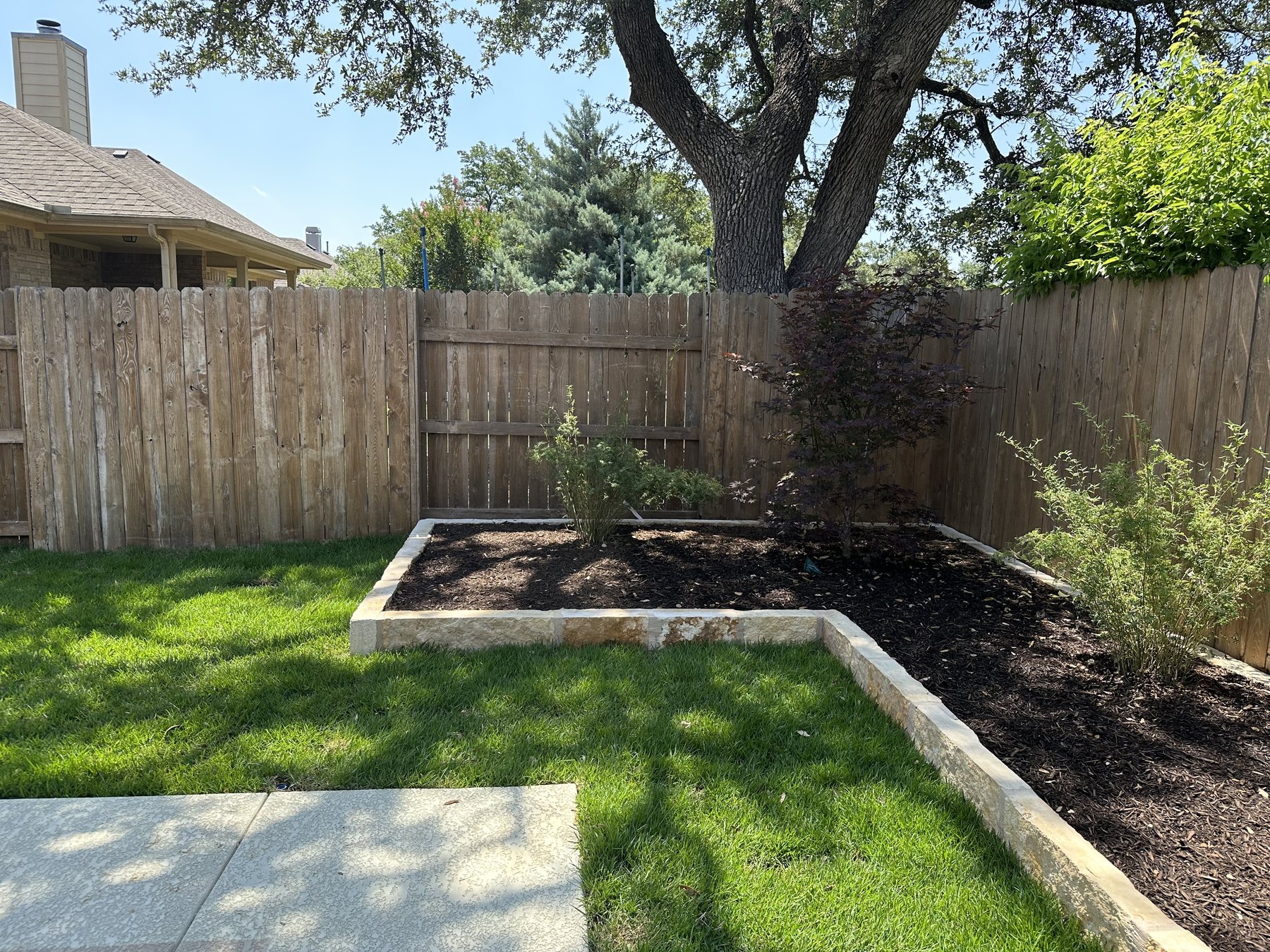
Plants near a pool deal with reflected heat, splashed water and bare feet. The best choices drop very little into the water. The Collin County Master Gardeners point out that crape myrtles, deciduous trees and magnolias are messy near a pool, that holly berries can stain decking, and that thorny or spiky plants do not belong where kids play (Collin County Master Gardeners). Organic mulch also blows into the water and uses up chlorine, so rock or gravel works better at the edge (Hydra Pool Services).
How I usually approach it:
- Closest to the water: low, clean plants and rock. A band of river gravel between the deck and the beds keeps mulch off the deck and gives splash water somewhere to soak in.
- Middle layer: evergreen shrubs and perennials that hold their shape, such as yaupon holly, loropetalum, salvias and agapanthus.
- Along the fence: the taller privacy layer. In Leander we used clumping fernleaf bamboo, Scarlet Peak yaupon and Purple Diamond loropetalum. If you use bamboo, choose a clumping type, not a running bamboo.
- Trees: place them where their leaves fall on the lawn or deck, not into the water, and keep larger trees well back from the pool shell and plumbing.
Rebuild the irrigation, do not just patch it
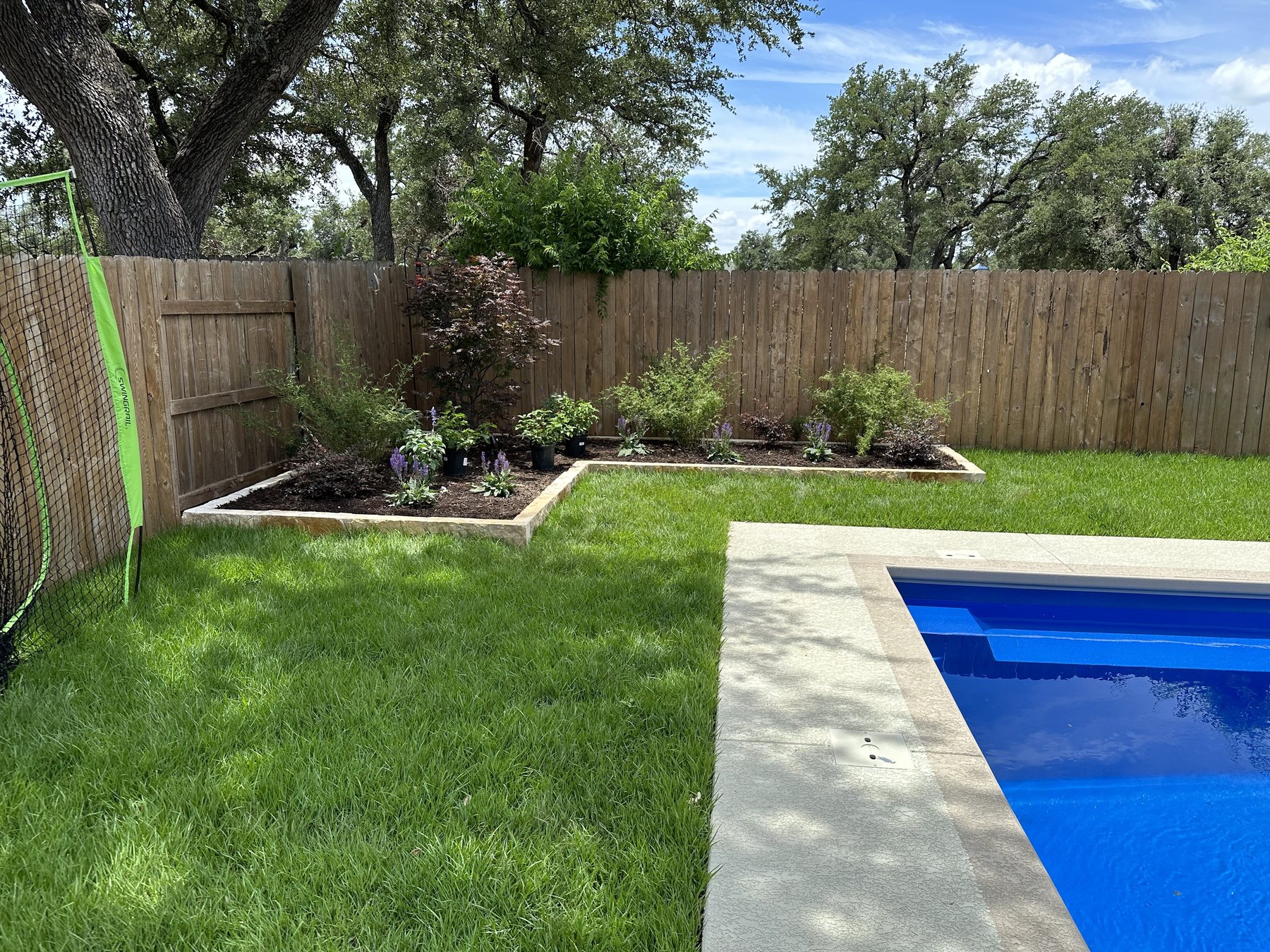
Pool construction almost always damages part of the existing irrigation system, and the old zones no longer match the new layout. Spray heads that once watered lawn may now hit the deck or the pool. On the Leander project we did a complete irrigation refit instead of patching the old system, so lawn, beds and the new privacy plantings each get the water they need without overspray onto the deck.
Light it for the evenings
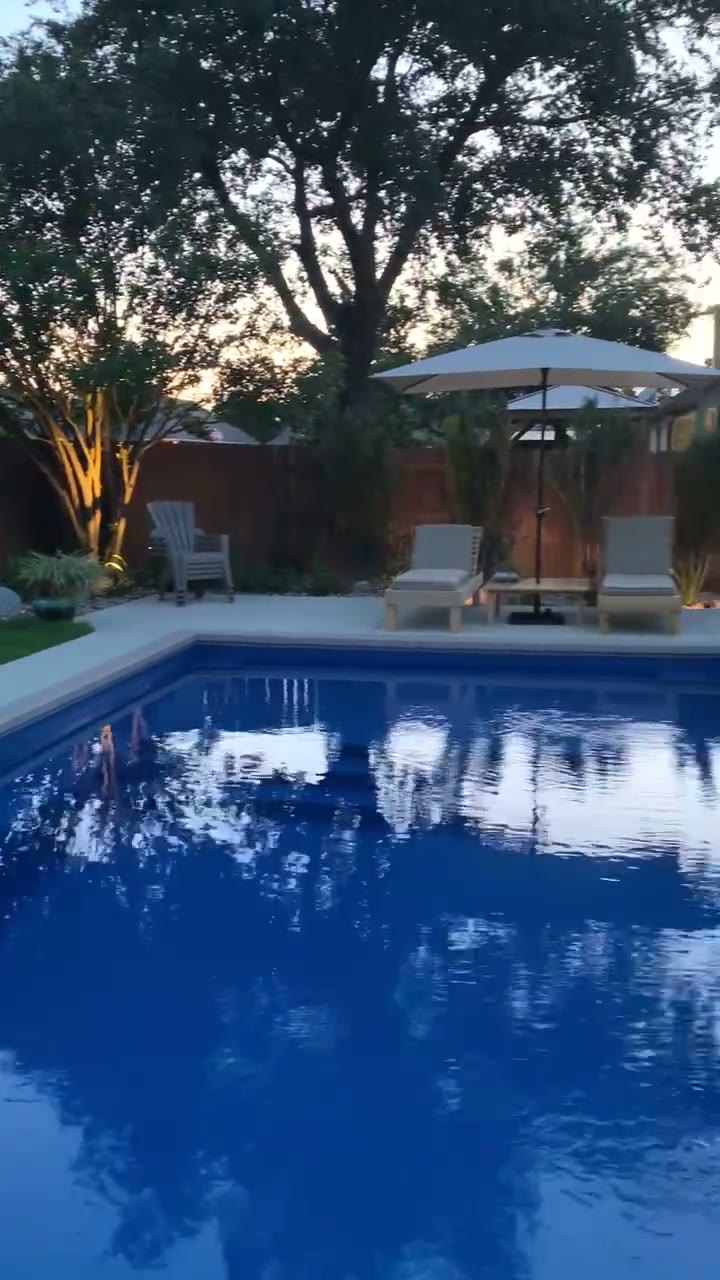
Most families use their pool most in the evening, once the sun is off the deck. Low-voltage landscape lighting on trees, beds, paths and steps makes the yard usable and safer after dark. Planning the lighting with the pool means cable can run through sleeves under the deck instead of across it.
Think beyond the pool
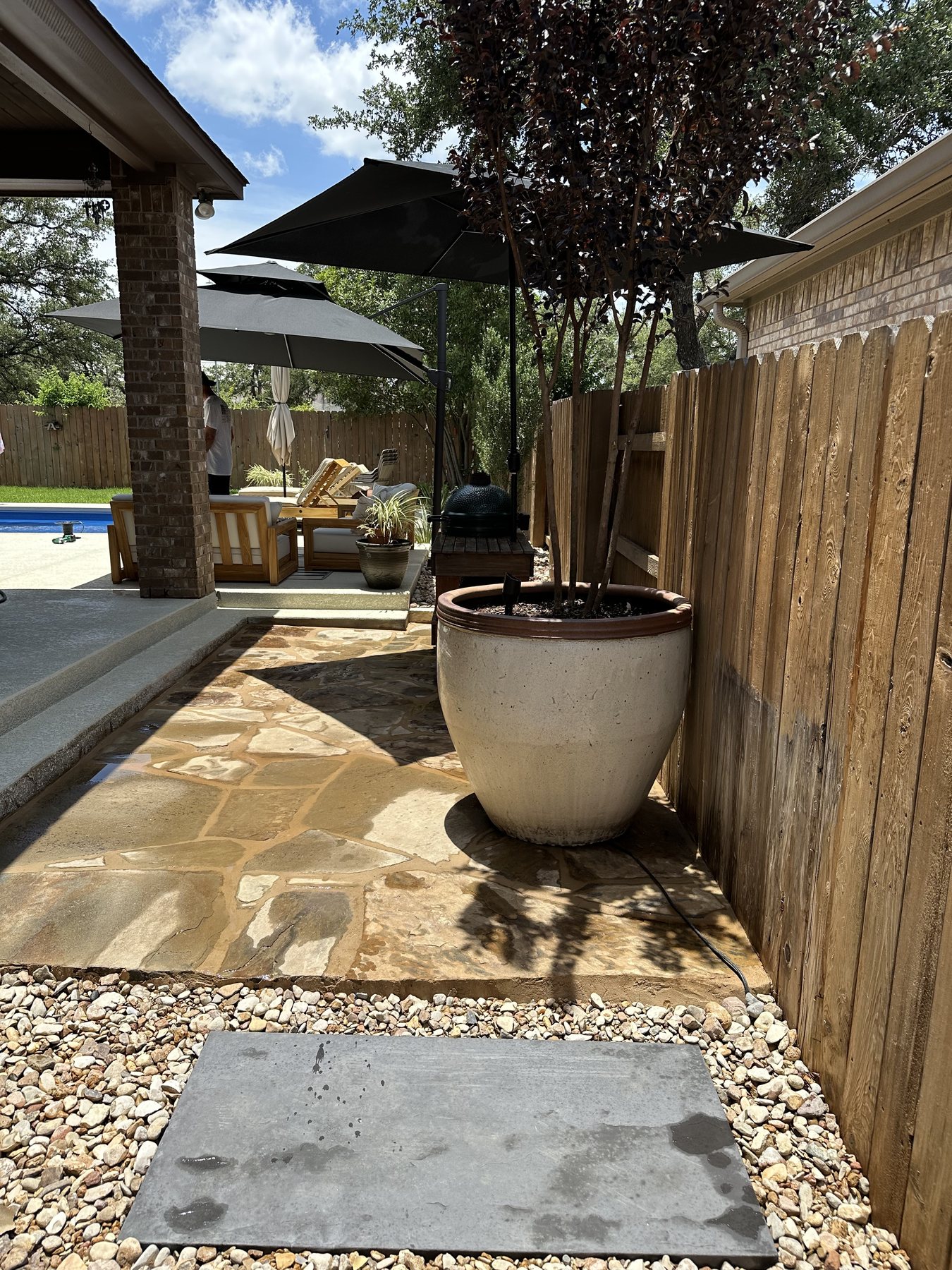
A pool changes how you use the whole backyard. On the Leander project the clients also wanted a small wet-set sandstone patio for an outdoor cooking area, a stepping-stone path from the side gate, a recirculating pottery water feature and new beds in the front yard. Designing those pieces together made the yard feel finished, not like a pool dropped into an old landscape.
Frequently asked questions
When should I hire a landscape designer for a pool project?
Before the pool is dug. That is when you can plan drainage, sleeves for irrigation and lighting, and bed space along the fence, without cutting new concrete later.
What fence does a pool need in Leander, Texas?
The City of Leander requires a fence at least 4 feet tall and a self-latching gate at least 54 inches high for a swimming pool permit. Check your HOA rules too.
What plants are best around a pool in Central Texas?
Low-litter, heat-tolerant evergreens and perennials, such as yaupon holly, loropetalum, salvias and agapanthus, set back from the water with a rock buffer. Keep thorny plants and heavy leaf droppers away from the water.
Do I need new irrigation after a pool is installed?
Usually. Pool construction often breaks lines, and the old zones rarely match the new layout. A full refit is often cleaner than patching.
Planning a pool? See the full Leander pool and landscape project, then start a conversation or schedule a discovery call. Consultations are by appointment.
Written by Jack H. Gardner, landscape designer, Texas Certified Landscape Professional (TCLP #756) and APLD member.