
It’s the first question almost everyone asks, usually a little nervously: what is this going to cost? It’s a fair question, and the honest answer is that it depends on the property, the scope and how much of the work happens on paper versus in the ground. This article breaks down how landscape design is priced at my studio, what drives the cost of installation in the Austin area, and how to plan a budget that holds up.
Two separate costs: the design and the build
A landscape project has two parts, and it helps to budget for them separately.
- The design. This is the plan itself: a site evaluation, the layout, a 2D landscape plan with plant schedule and quantities, and 3D visuals of the key views. Design plans at my studio typically start around $4,500 for a single yard, depending on the size of the property and the level of detail.
- The installation. This is the labor, materials, equipment and subcontractors that turn the plan into a finished yard. Projects that include design and installation oversight typically begin around $30,000. My selected work ranges from about $30,000 to more than $250,000.
For context, my design starting price sits right at the national average. According to HomeAdvisor’s 2026 cost guide:
Expect to pay an average of $4,588 to bring in a landscape designer, although most homeowners land between $1,934 and $7,267.
HomeAdvisor, How Much Does Landscape Design Cost in 2026?
Some homeowners hire me for design only and take the plan to their own installer. Others want me involved through the build. Both are normal, and the design fee is the same either way.
What the design fee covers
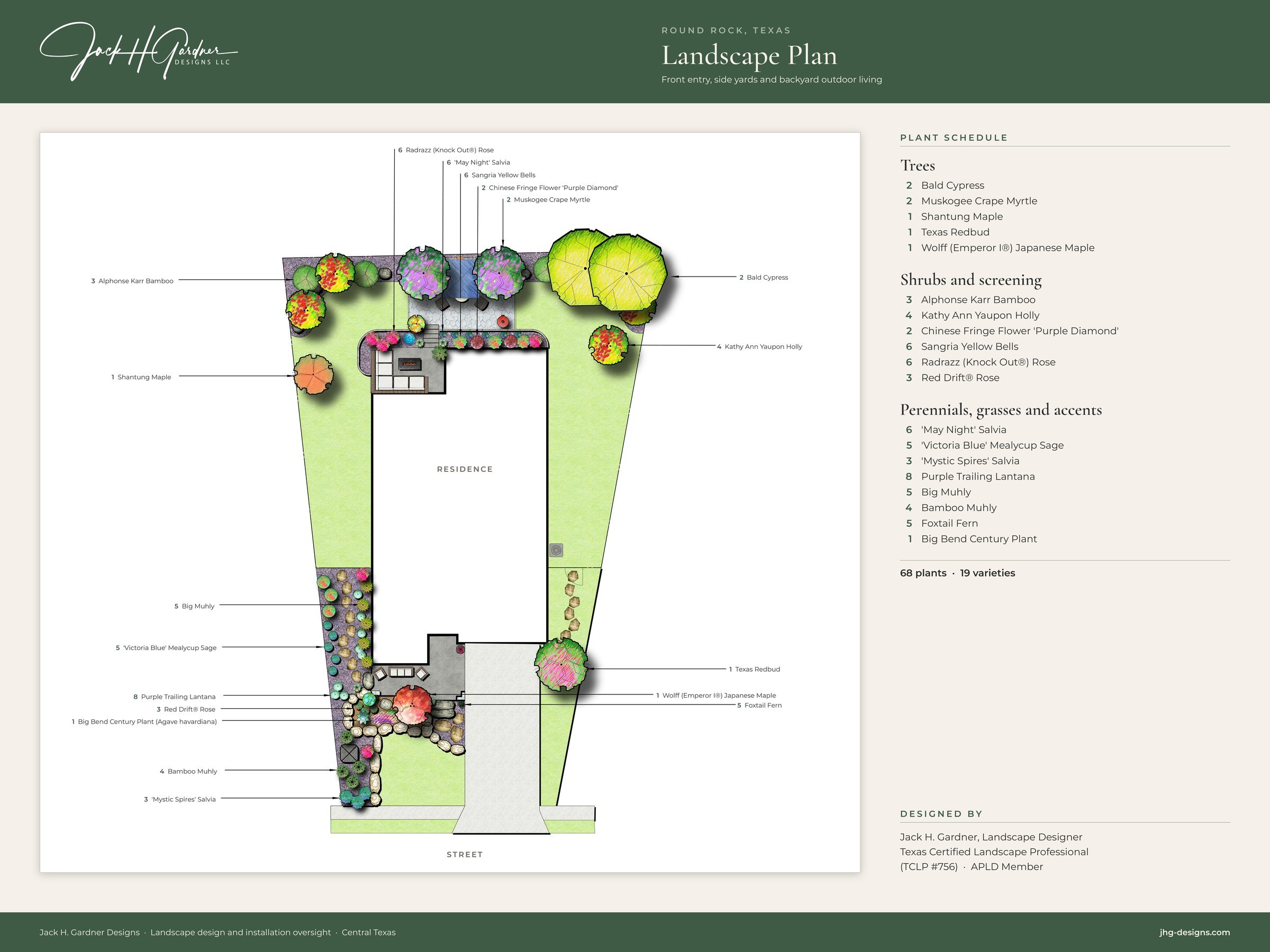
A good plan is what keeps the installation budget honest. Because the 2D plan lists every plant, every bed and every hardscape area with quantities, installers are all pricing the same project. Without one, bids are often hard to compare because each contractor is pricing their own version of the yard.
Research backs up the value of the design itself. A multi-state study summarized by Virginia Cooperative Extension at Virginia Tech asked homeowners to value homes with different landscapes. Design sophistication ranked as the most important factor, ahead of plant size and plant variety. The author’s conclusion:
Investing in the services of a landscape design professional will optimize the value of a home.
Alex X. Niemiera, Virginia Tech, The Effect of Landscape Plants on Perceived Home Value
For most projects, design includes:
- An on-site consultation to look at the house, drainage, sun, soil and how you use the yard
- A concept layout and material direction
- A scaled 2D landscape plan with plant palette, quantities, lighting layout and construction notes
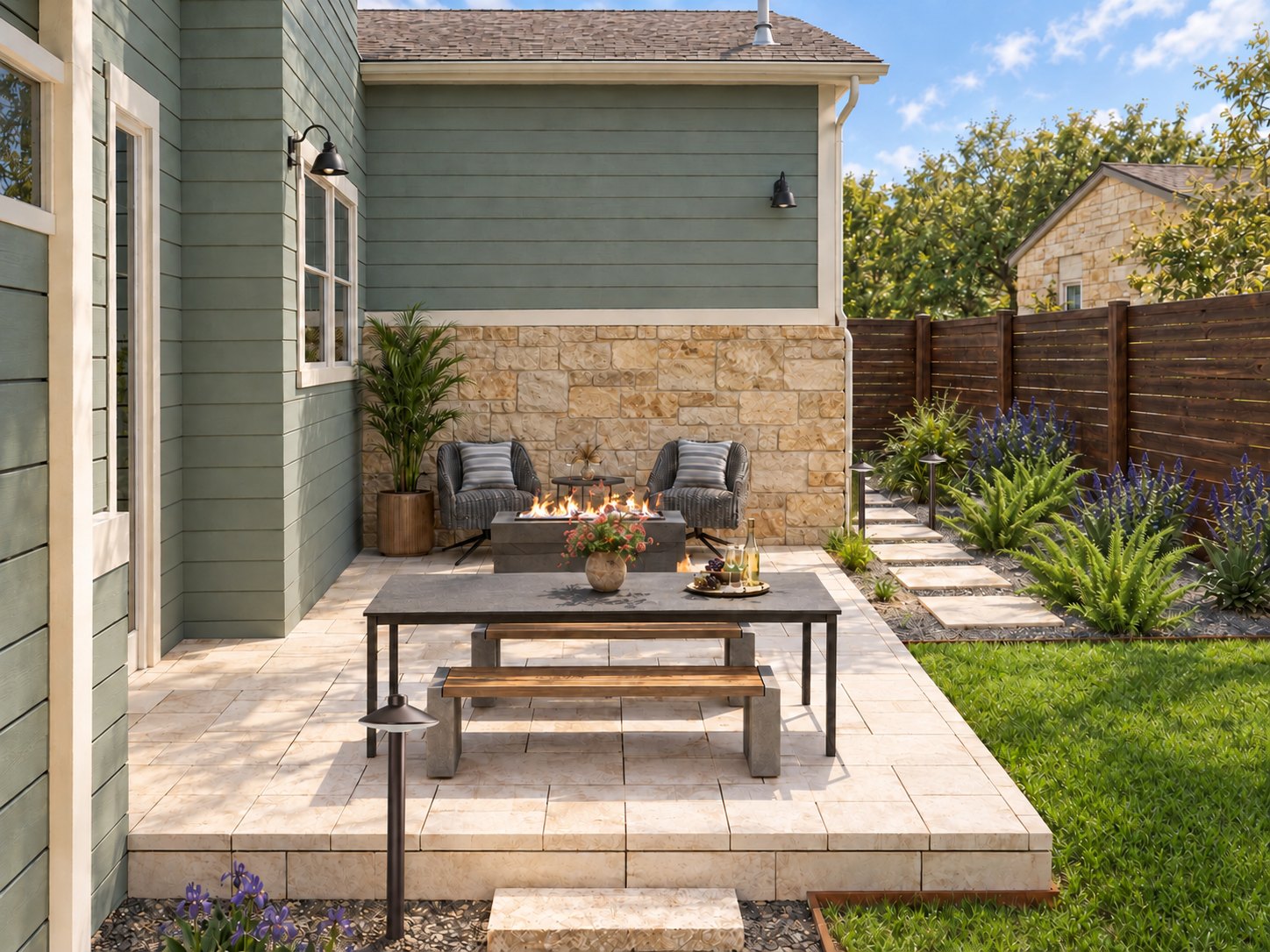
- 3D renderings so you can see the design before anything is built
What drives installation cost in Central Texas
Two yards of the same size can cost very different amounts to build. These are the biggest factors I see in Austin, Round Rock, Leander and the Hill Country:
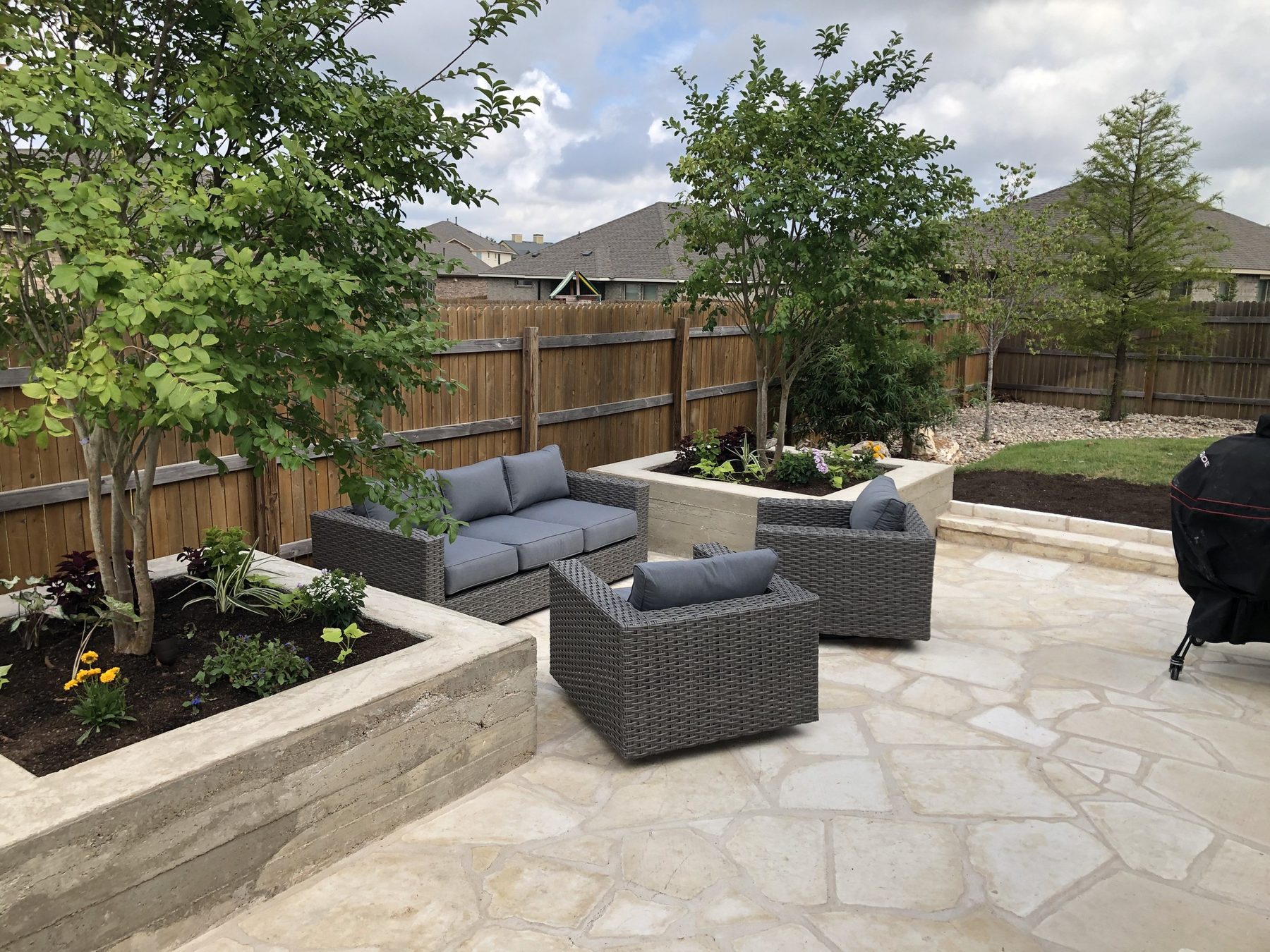
- Hardscape versus planting. Patios, walls, steps, planters and outdoor kitchens cost far more per square foot than planting beds. The hardscape share of the plan usually sets the budget.
- Slope and grading. A flat lot is simpler. Sloped Hill Country lots often need retaining tiers, steps and drainage before anything decorative goes in. See Hill Country landscape design for more on sloped sites.
- Soil and rock. Expansive Blackland clay east of I-35 and shallow limestone to the west both affect excavation, bed preparation and what has to be hauled in or out.
- Drainage. Water that has nowhere to go will undo a new landscape. Drain lines, catch basins and grading cost money up front but cost less than repairs later.
- Access. Narrow side yards and no rear access mean more hand work and smaller equipment.
- Lighting and irrigation. Low-voltage lighting and a new irrigation layout are worth planning with the design so wire and sleeves go in before concrete.
- Plant size. A 30-gallon tree costs several times what a 5-gallon one does. Planting smaller and letting the garden grow in is one of the easiest ways to save.
- Custom work. Features like a water feature or corten steel planters fabricated on site add cost, and they also tend to be what makes a yard memorable.
How much should you spend on landscaping?
A common rule of thumb comes from the landscape profession itself. As the Pennsylvania Association of Realtors puts it:
The American Society of Landscape Architects (ASLA) recommends that homeowners invest 10 percent of the home’s value in landscaping.
Pennsylvania Association of Realtors, Does Landscaping Increase Property Value?
On an $800,000 home, that’s about $80,000. You don’t have to spend it all at once, and many of my clients build in phases, but it’s a useful way to keep the landscape in proportion to the house.
Real estate agents see the payoff when homes sell. In the National Association of Realtors’ 2023 Remodeling Impact Report, 92 percent of Realtors said they suggest sellers improve curb appeal before listing, according to Florida Realtors. The same report estimated that an overall landscape upgrade recovers about 100 percent of its cost at resale, and a new patio about 95 percent (National Association of Realtors).
The research on home value points the same direction. In the Virginia Tech summary, going from no landscaping to a well-landscaped yard raised perceived home value by 5.5 to 11.4 percent across seven states, and by 12.7 percent in a Michigan study (Virginia Cooperative Extension).
How I price installation oversight
When I oversee the build, I use a cost-plus approach. Materials are billed at what they actually cost, and any trade discounts I get are passed through to you. My compensation for managing the build is a separate, fixed oversight fee that we agree on up front for the scope of the project.
That fee doesn’t go up because a material costs more than expected. You see exactly what the materials cost, and you know exactly what you’re paying me to coordinate the installers and subcontractors, review the work on site and solve problems as they come up.
How to make a budget go further
- Design the whole property once, then build in phases. A complete plan lets you do the front yard this year and the backyard next year without redoing anything.
- Put the money into the bones. Spend on grading, drainage and good hardscape. Plants can start smaller.
- Choose native and adapted plants. They cost less to keep alive in our summers and need less replacement.
- Plan before other projects. If a pool, addition or new driveway is coming, plan the landscape first. My article on landscaping around a new pool covers why.
Frequently asked questions
How much does a landscape design plan cost in Austin?
At my studio, design plans typically start around $4,500 for a single yard. Larger properties, multiple yards or more detailed documentation cost more. Every project starts with a fee-based consultation.
Can I hire you for design only?
Yes. You’ll get a 2D plan with quantities that any qualified installer can price and build from.
What does a full landscape installation cost?
Projects with design and installation oversight typically begin around $30,000. My completed work ranges from about $30,000 to more than $250,000, depending mostly on hardscape, grading and custom features.
What percentage of my home’s value should go to landscaping?
A widely cited guideline, attributed to the American Society of Landscape Architects, is about 10 percent of the home’s value. Treat it as a starting point, not a rule. Your site, goals and phasing matter more.
Is the design fee wasted if I don’t build everything at once?
No. A full plan is what makes phasing work, because each phase fits the next one.
Ready to talk about your yard? See landscape design in Austin, then start a conversation or schedule a discovery call. Consultations are by appointment.
Written by Jack H. Gardner, landscape designer and Texas Certified Landscape Professional (TCLP #756).